
Where to Stay in South Korea
A regional guide to accommodation across the country
Seoul owns South Korea's accommodation game. Twenty-five million people. Five-star chains on one block, $15 jjimjilbang bathhouse-hotels on the next. Total chaos. Worth it. Each Seoul neighborhood plays its own hotel card. Gangnam stacks business towers. Insadong and Jongno hide hanok guesthouses. Hongdae throws hip budget hostels at you. South Korea hotels in Seoul cover every angle, Asia's most flexible capital for any wallet. Leave Seoul and the country splits into three other worlds. Busan's beachside hotels along Haeundae shore grab $80-200 in August then crash come winter. Jeju Island runs resort logic, family complexes with ocean views, private pools, booked months ahead at peak. Gangwon and Gyeongbuk provinces flip the script: traditional hanok villages, temple-stay programs, ski lodges that cost a fraction of comparable European options. The price-to-quality ratio stays ridiculous. Clean double in Seoul's Myeongdong: $50-80. Busan mid-range hotels: $60-100 average. Budget crowd? Goshiwons, capsule hotels, youth hostels, all $18-30 a night in any major city. Luxury exists but tops out modest, best Seoul properties hit $200-450, rarely higher.
Where to Stay in South Korea
Hand-picked hotels across price tiers for every visitor.
★★★★
Mid-Range
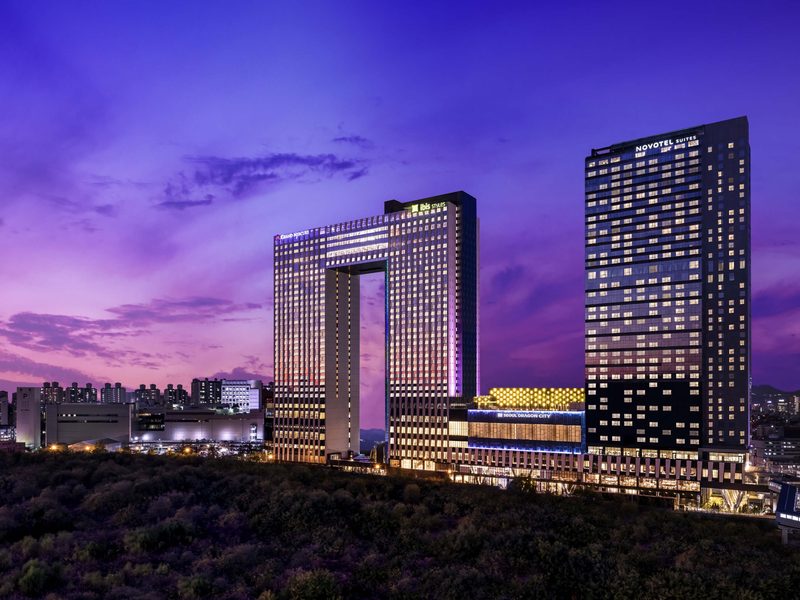
Ibis Styles Ambassador Seoul Yongsan - Seoul Dragon City
From $163 / night
Check Prices on Trip.com →
Our Top Picks
The highest-rated hotel in each price range, selected from across South Korea.
Top Pick: Seoul & Capital Region
Budget
Sinchon APL Hotel
"Very convince hotel. The staff very helpful. Near hongde and subway station. Hig…"
Luggage storage
Fax/copying service
Laundry room
Seoul & Capital Region
Check prices on Trip.com →
Top Pick: Seoul & Capital Region
Mid Range
The Plaza Seoul, Autograph Collection
"Excellent service and room is clean.Good location, train accessible.The gym is…"
Public parking
Indoor swimming pool
Sauna
Spa
Seoul & Capital Region
Check prices on Trip.com →
Top Pick: Seoul & Capital Region
Luxury
The Shilla Seoul
"This is a great hotel, although the rooms are a bit small. The front desk was a…"
Private parking
Outdoor swimming pool
Indoor swimming pool
Sauna
Seoul & Capital Region
Check prices on Trip.com →
Find Hotels Across South Korea
Compare prices from hotels across all regions
Search HotelsPrices via Trip.com. We may earn a commission from bookings.
Regions of South Korea
Each region offers a distinct character and accommodation scene. Find the one that matches your travel plans.
Seoul & Capital Region
Mixed
Seoul drives Korean tourism and offers the country's widest accommodation range. Each district tells a different story. Myeongdong and Jung-gu cram mid-range business hotels beside shopping and palaces. Hongdae pulses with indie hostels and guesthouses that young international travelers love. Gangnam-gu lines up polished business towers and luxury flagships. Bukchon and Insadong are where you stay in a restored hanok. Incheon, home to the international airport, has its own cluster of transit hotels plus the walkable Songdo International Business District.
Accommodation: $18 capsule hotels. $400/night luxury towers. The entire spectrum crams itself within easy metro access of every major sight, no exceptions.
Where to stay in this region
Budget
Sinchon APL Hotel
"Very convince hotel. The staff very helpful. Near hongde and subway station. Hig…"
Luggage storage
Fax/copying service
Laundry room
✓ Verified
Check prices on Trip.com →
Mid Range
The Plaza Seoul, Autograph Collection
"Excellent service and room is clean.Good location, train accessible.The gym is…"
Public parking
Indoor swimming pool
Sauna
Spa
✓ Verified
Check prices on Trip.com →
Luxury
The Shilla Seoul
"This is a great hotel, although the rooms are a bit small. The front desk was a…"
Private parking
Outdoor swimming pool
Indoor swimming pool
Sauna
✓ Verified
Check prices on Trip.com →
Budget
Constello Myeongdong
"The rooms are clean and tidy, with complete facilities including a washing machi…"
Parking
Luggage storage
Airport pick-up
Wi-Fi in public areas
✓ Verified
Check prices on Trip.com →
Luxury
Lotte Hotel Seoul
"This lives up to its five-star rating. The location is absolutely fantasti"
Public parking
Indoor swimming pool
Executive lounge
Gym
✓ Verified
Check prices on Trip.com →
Busan & Southeast Coast
Mid-range to High (July-August), Affordable (off-peak)
Busan doesn't do subtle. Korea's second city crams personality into hillside neighborhoods, fish markets, and beaches that'll make you forget Seoul exists. Haeundae Beach dominates, the hotel corridor, a concrete canyon of high-rise towers staring down at sand that hits capacity every single August. No exceptions. Gwangalli gives you breathing room. Same water, fewer elbows, plus that illuminated Diamond Bridge throwing light across the bay like a runway. Port neighborhoods tell another story. Nampo-dong and Gamcheon Cultural Village, gritty, real, cheap. Budget travelers crash in local guesthouses here, the kind where the owner's grandmother might hand you kimchi at midnight. Ulsan sits an hour north. Industrial sprawl, sure, but it is the launch point for haenyeo diving culture around Ulju. These women dive. You watch. Everyone wins.
Accommodation: Beach-front towers at Haeundae, boutique hotels in Gwangalli, and 30,000-won yeogwan guesthouses in the old city.
Where to stay in this region
Budget
Roynet Hotel Seoul Mapo
"The place is convenient and I recommend the location."
Public parking
Executive lounge
Gym
Luggage storage
✓ Verified
Check prices on Trip.com →
Mid Range
Lotte Hotel World Gangnam
"Overall, a great experience! I didn't see any toothbrushes (I heard many places…"
Private parking
Sauna
Executive lounge
Gym
✓ Verified
Check prices on Trip.com →
Luxury
The Westin Josun Seoul
"Location: The location is very convenient. From the lobby on the first floor, yo…"
Public parking
Indoor swimming pool
Sauna
Spa
✓ Verified
Check prices on Trip.com →
"The hotel is great and good spot for shopping around the area as well as the loc…"
Public parking
Indoor swimming pool
Casino
Sauna
✓ Verified
Check prices on Trip.com →
"I stayed one night with a friend who lives in Seoul for the first time in a long…"
Private parking
Indoor swimming pool
Casino
Sauna
✓ Verified
Check prices on Trip.com →
Mid-range to High
Jeju isn't Seoul. Korea's volcanic island province runs on its own clock, resort time. Tourists, foreign and Korean, land here expecting beaches, not business. The beds follow the crowd: massive family resorts cram Jeju City's northern coast, while Seogwipo's southern shore keeps boutique places with ocean views and lava-rock gardens. No subway, no KTX. Driving is essentially mandatory (unlike the mainland), so most hotels hand over a parking pass without asking. The Olle walking trails changed the game, now trail-adjacent guesthouses cater to hikers who'd rather stroll than sprint.
Accommodation: Coastlines are stacked with resorts, big ones, flashy ones, the works. Head inland instead. Near Hallasan National Park, small guesthouses and family-run pensions are multiplying fast.
Gateway Cities
Jeju City
Seogwipo
Where to stay in this region
"Self-check-in was a breeze. Just used the booker's English name to get the room…"
Private parking
Luggage storage
Cafe
Taxi booking service
✓ Verified
Check prices on Trip.com →
Mid Range
Walkerhill Douglas House
"It was good for a quiet vacation in the city. They picked me up by limousine"
Parking
Casino
Massage room
Gym
✓ Verified
Check prices on Trip.com →
"The hotel was very thoughtful, presenting a birthday gift and card to the child…"
Public parking
Indoor swimming pool
Executive lounge
Gym
✓ Verified
Check prices on Trip.com →
Mid Range
Novotel Suites Ambassador Seoul Yongsan
"Location: Connected to Yongsan Station by a skybridge, the hotel is a convenient…"
Public parking
Indoor swimming pool
Casino
Sauna
✓ Verified
Check prices on Trip.com →
Mid Range
Moxy Seoul, Myeongdong
"This is my third time in Seoul but first time staying with Moxy, this location i…"
Public parking
Priority airport pick-up
Luggage storage
Bar
✓ Verified
Check prices on Trip.com →
Gyeongju & North Gyeongsang Province
Budget to Mid-range
Gyeongju, an open-air museum where royal burial mounds rise from the city center and UNESCO World Heritage sites line every road. The ancient Silla capital doesn't do modern. Hanok guesthouses and small Korean-style hotels dominate the scene. Only a handful of larger properties break the pattern. Two hours north, Andong beats with Confucian village culture. Hahoe Folk Village hosts traditional private homestays, experiences you won't find anywhere else in Korea.
Accommodation: Hanok guesthouses, real ones, sit shoulder-to-shoulder with small Korean-style hotels and a clutch of international chain properties, all within a five-minute walk of the historic sites.
Where to stay in this region
"I am glad to stay at this hotel during my 5-day stay in Seoul. The location is…"
Luggage storage
Restaurant
Cafe
Secretarial services
✓ Verified
Check prices on Trip.com →
Mid Range
Hotel Naru Seoul - MGallery Collection
"The hotel facilities are very new, and the exterior design is quite stylish. The…"
Private parking
Indoor swimming pool
Outdoor swimming pool
Gym
✓ Verified
Check prices on Trip.com →
"The hotel is clean and the location is great. The airport shuttle goes directly…"
Public parking
Sunbathing area
Indoor swimming pool
Sauna
✓ Verified
Check prices on Trip.com →
Mid Range
Pullman Ambassador Seoul Eastpole
"An impressive new hotel. The moment you walk in, the atmosphere catches your"
Private parking
Indoor swimming pool
Gym
EV charging station
✓ Verified
Check prices on Trip.com →
Mid Range
L7 HONGDAE by LOTTE HOTELS
"Good service! The hotel management gave us side by side rooms. The standard tri…"
Public parking
Outdoor swimming pool
Gym
Luggage storage
✓ Verified
Check prices on Trip.com →
Gangwon Province & Ski Resorts
Budget to Mid-range (summer), Mid-range to High (ski season)
Skip Seoul, Korea's real action is northeast. Seoraksan National Park explodes with color each autumn, Sokcho and Yangyang serve up East Sea surf, and the Pyeongchang highlands deliver excellent ski runs. Alpensia, YongPyong, and High1 anchor the winter season with fast lifts and empty slopes. The province hosted the 2018 Winter Olympics and still keeps that same excellent ski infrastructure at price points well below comparable Alpine destinations. Come summer, the same mountain towns flip the switch, hiking bases packed with trail-adjacent pensions and guesthouses ready for boots and backpacks.
Accommodation: Ski lodges hug the slopes. Seafront hotels line coastal towns. Mountain pensions crowd Seoraksan trails.
Where to stay in this region
Budget
Lake Hotel
"This is a clean and classy accommodation. While not brand new, it's a spacious a…"
Private parking
Sauna
Massage room
Airport pick-up
✓ Verified
Check prices on Trip.com →
Mid Range
NINE TREE BY PARNAS SEOUL INSADONG
"The best location I've ever stayed in Seoul! Convenient public transportations a…"
Private parking
Executive lounge
Gym
EV charging station
✓ Verified
Check prices on Trip.com →
"We were traveling together and both of us have trouble sleeping, so we chose a t…"
Private parking
Indoor swimming pool
Sauna
Spa
✓ Verified
Check prices on Trip.com →
Mid Range
The Ambassador Seoul - A Pullman Hotel
"This hotel is excellent, offering great value for money. The rooms aren't small…"
Private parking
Indoor swimming pool
Outdoor swimming pool
Sauna
✓ Verified
Check prices on Trip.com →
Mid Range
Grand Walkerhill Seoul
"The environment is nice, with a river and mountains. You can take bus 6705A dire…"
Private parking
Golf course
Indoor swimming pool
Casino
✓ Verified
Check prices on Trip.com →
Jeonju & Jeolla Province
Budget to Mid-range
Jeonju sits at the crossroads of Korea's culinary obsession, this is where food stops being mere sustenance and becomes culture. The Hanok Village (Hanokmaul) packs the nation's densest cluster of traditional wooden homes into one walkable grid, and bedding down in a converted hanok guesthouse ranks among Korea's singular sleep experiences. Southward, the coast and Dadohae Maritime National Park's scatter of islands trade speed for salt air, ferries only, raw charm guaranteed.
Accommodation: Hanok guesthouses own Jeonju's center. You'll find them everywhere. Coastal towns? They lean on family pensions and small hotels, each one angled for harbor views.
Where to stay in this region
Budget
N285Hotel
"A very good hotel, the room was clean and beautiful interior. The view from the…"
Luggage storage
Currency exchange
Wi-Fi in public areas
Laundry room
✓ Verified
Check prices on Trip.com →
Mid Range
Hotel Skypark Kingstown Dongdaemun
"The room was a bit small, and the bed was quite tiny. We could feel the strong w…"
Private parking
Gym
Luggage storage
Restaurant
✓ Verified
Check prices on Trip.com →
Luxury
ANDAZ SEOUL GANGNAM
"My second stay here, and it's still my top choice when visiting Korea. This year…"
Private parking
Indoor swimming pool
Sauna
Spa
✓ Verified
Check prices on Trip.com →
Mid Range
NINE TREE BY PARNAS SEOUL MYEONGDONG 2
"The Sky Room's layout made the room feel a bit small, and I couldn't see N Seoul…"
Gym
Luggage storage
Restaurant
Currency exchange
✓ Verified
Check prices on Trip.com →
Mid Range
HOTEL THE BOTANIK SEWOON MYEONGDONG
"This hotel was a surprise, didn't expect to find such a nice hotel at that area.…"
Private parking
Gym
EV charging station
Luggage storage
✓ Verified
Check prices on Trip.com →
Daegu & North Gyeongsang Highlands
Budget to Mid-range
Korea's fourth-largest city sits in a basin between mountain ranges, making it the hottest city in summer and a surprisingly lively urban base for reaching Gayasan and Palgongsan national parks. Daegu's Dongseongno district is the downtown restaurant and nightlife corridor with a concentration of business hotels. The city is dramatically undervisited by international travelers. That means better value. More genuine local experiences than Seoul or Busan deliver.
Accommodation: Business hotels dominate the city center, clean, efficient, predictable. Seomun Market keeps its own rhythm. Tiny yeogwan guesthouses lean against the stalls, paper-thin walls and 24-hour kimchi scent. Want silence? Head for Haeinsa. The mountain temple-stay accommodations trade Wi-Fi for wood smoke, 4 a.m. bells, and rice you wash yourself.
Gateway Cities
Where to stay in this region
Budget
Hotel Morning Sky
"We arrived in winter and were worried it would be cold. But the hotel was very w…"
Luggage storage
Taxi booking service
Wake-up call
Wi-Fi in public areas
✓ Verified
Check prices on Trip.com →
Mid Range
NINE TREE BY PARNAS SEOUL MYEONGDONG 1
"Nine Tree Seoul Myeongdong 1 Hotel is very conveniently located at one end of My…"
Luggage storage
Restaurant
Taxi booking service
Currency exchange
✓ Verified
Check prices on Trip.com →
Luxury
The Westin Seoul Parnas
"Stayed at this new hotel recently. Positives: Spacious swimming pool with good f…"
Public parking
Sauna
Executive lounge
Gym
✓ Verified
Check prices on Trip.com →
"The hotel is a bit far from the city center. But compared to hotels in the city,…"
2 Public parking lots
Indoor swimming pool
Outdoor swimming pool
Executive lounge
✓ Verified
Check prices on Trip.com →
Mid Range
New Blanc Central Myeongdong
"Had a lovely stay at New Blanc Central Myeongdong, located in a relatively quie…"
Private parking
Executive lounge
Gym
Luggage storage
✓ Verified
Check prices on Trip.com →
West Coast & Chungcheong Province
Budget to Mid-range
Skip Seoul's orbit and head west, Korea's western provinces deliver the payoff others miss. The tidal flats (getbol) of the west coast are UNESCO World Heritage-listed and host migratory bird populations that draw specialists worldwide. Daejeon is the region's urban hub, a mid-sized technology city with good transport connections. Cheonan and Asan are common bases for travelers near Asan Bay and the independence museum.
Accommodation: Business hotels in Daejeon, seaside pensions along the Taean Peninsula coast, and small guesthouses in the mud flat towns
Gateway Cities
Where to stay in this region
Budget
SL Hotel Myeongdong
"New hotel, clean, location is great, in room laundry machine is just perfect!"
Public parking
EV charging station
Luggage storage
Taxi booking service
✓ Verified
Check prices on Trip.com →
Mid Range
Shilla Stay Mapo (Hongdae)
"The location is a business area but very close to bus stops, underground station…"
Private parking
Public parking
Gym
Luggage storage
✓ Verified
Check prices on Trip.com →
Mid Range
ROYAL HOTEL SEOUL Myeongdong
"I recently stayed at the Royal Hotel Seoul in Myeongdong, and overall, it's a so…"
Private parking
Spa
Massage room
Executive lounge
✓ Verified
Check prices on Trip.com →
Mid Range
Aiden by Best Western Cheongdam
"I will not stay at this hotel again. The front desk staff were not attentive. I…"
Private parking
Gym
Bar
Restaurant
✓ Verified
Check prices on Trip.com →
Mid Range
Oakwood Premier Coex Center Seoul
"Location is great right next to coex. We reserved a studio deluxe but upon check…"
Private parking
Indoor swimming pool
Sauna
Gym
✓ Verified
Check prices on Trip.com →
Accommodation Landscape
What to expect from accommodation options across South Korea
International Chains
Marriott, Hilton, Hyatt, and IHG don't just dip their toes, they run multiple Seoul properties, plus outposts in Busan and Jeju. Korean chains, Lotte Hotels & Resorts, Shilla, and Hana Tour, own the most prestigious domestic spots and punch toe-to-toe with the global giants. Mid-range Korean chains like Benikea and Tmark operate nationwide with reliable quality. The government-backed Korea Tourism Organization slaps star ratings on yeogwan guesthouses.
Local Options
Outside the big cities, Yeogwan, Korean-style guesthouses, still anchor every budget and mid-range trip. You'll sleep on ondol floor heating, grab simple Korean breakfast options, and soak up intensely local character. Hanok guesthouses in Jeonju, Gyeongju, and Seoul's Bukchon district have been restored to boutique standard. Minbak, home-stay pensions, own the coast and countryside. Temple-stay programs at Buddhist temples including Haeinsa, Beomeosa, and Tongdosa run overnight meditation retreats for $50-80 per person including meals.
Unique Stays
Temple-stay programs through the official Templestay.com network let you sleep inside working Buddhist monasteries, yes, actual monks, actual dawn bells. You'll join meditation sessions and monk-led ceremonies. Real deal. Jjimjilbang, Korean bathhouses with sleeping areas, deliver the cheapest legitimate overnight in any Korean city at $10-20. Total bargain. You'll share floors with salarymen, grandmas, and travelers. Pure local experience. Traditional hanok guesthouses in Jeonju's Hanok Village put you on heated ondol floors beneath curved tiled roofs. No beds, just quilts and warm stone. Feels like 1890, minus the cholera. Glamping sites around Namhansanseong fortress and Dumulmeori riverbanks give you outdoor stays with full amenity pods. Think air-con, Wi-Fi, and zip-up walls. Camping for people who hate camping.
Ready to book?
Compare hotel prices across South Korea
Search Hotels in South KoreaBooking Tips for South Korea
Country-specific advice for finding the best accommodation
Book Jeju and Busan beach hotels 2-3 months early
Haeundae-facing hotels in Busan and the major Jeju resorts sell out completely for July and August. Korean domestic tourism is massive, these destinations fill up before international booking windows even open. Book in April for summer stays. The rest of South Korea rarely needs more than two weeks advance booking.
Search hotels →Naver and Korean apps often beat international platforms
Korean booking platforms Naver Travel (네이버 예약) and Yanolja beat Booking.com and Hotels.com by 15-25% on identical rooms. No VPN needed, both apps switch to English. For Korean business hotels, pick up the phone. Multi-night stays get the sharpest cuts.
Search hotels →Understand what you're booking: hotel vs. motel vs. yeogwan
In Korea, "motel" doesn't mean fleabag, it means love-hotel clean, open to all, no stigma. Expect whirlpool baths, amenity rooms, 40 000 ₩ a night. Yeogwan are the old-school version: floor mattresses, shared courtyards, 30 000 ₩. Same rule for both: read the photos, never the label.
Search hotels →Ski season prices spike sharply in Gangwon
Late December to February, YongPyong, Alpensia, and High1 resort hotels slam you with 2-3x their summer rates. Midweek? Forty percent cheaper than weekends. Sleep in Pyeongchang town or Hoengseong instead, drive or hop a bus to the lifts and pocket the difference.
Search hotels →When to Book
Timing matters for both price and availability across South Korea
High Season
Busan beach hotels are gone by April if you want July sand, reserve then or sleep inland. Jeju resorts? Lock in 8-12 weeks before summer hits; they've learned to ration rooms. Gangwon ski lodges sell out by late October for prime winter weekends. Procrastinate and you're driving home at dusk. Seoul Cherry Blossom season (late March-early April) spikes rates 20-30%, book six weeks ahead or pay the petals tax.
Shoulder Season
May-June and September-October are the best times to visit South Korea, mild weather, spectacular foliage in autumn, open beaches in spring. Prices run 20-35% below peak at coastal and mountain properties. Gyeongju and Jeonju are pleasant and bookable with 1-2 weeks notice.
Low Season
November and February-March (excluding ski areas) deliver the deepest discounts, 30-50% below peak at major beach hotels. Some Jeju pension properties simply shut November through February. Seoul and inland city hotels keep prices steady year-round, with only modest fluctuation.
Book one to two weeks out, mainland South Korea won't fight you. Seoul? You'll max out its charms in under seven days. Coastal summer stays and ski weekends are the only trips that demand months of planning.
Good to Know
Local customs and practical information for South Korea
Check-in / Check-out
15:00 check-in, 11:00 checkout, those are the rules. Small yeogwan and hanok guesthouses bend them. Call ahead, in Korean or by app, and they'll wait. Most Korean hotels will sell you two extra hours for 50% of the nightly rate. Ask.
Tipping
Skip the tip. In Korea, excellent service is the norm, not a favor. Handing over extra won can puzzle waiters. Service charges are already folded into upscale hotel bills. Rounding up a taxi fare or leaving coins on the table won't offend, but don't expect gratitude, no one is waiting for it.
Payment
Cards, Visa, Mastercard, work at every hotel. Cash still rules the tiny yeogwan, a few hanok guesthouses, and out-in-the-sticks pensions. KakaoPay and NaverPay QR codes are everywhere for Koreans. Foreign cards often can't tap them. Need won? Hit any CU, GS25, or 7-Eleven ATM, each lets you yank ₩700,000 per transaction.
Safety
South Korea is exceptionally safe. Solo women travel here without worry, it is that simple. Itaewon and Hongdae keep normal urban nightlife rules. Mind your bag, watch your drink. Emergency numbers: 119 for fire or ambulance, 112 for police. Most hotel front desks speak workable English and are the first resource for any problem.
Found your region?
Compare hotel prices now.
Search Hotels