Day Trips from South Korea

Day Trips from South Korea

The best excursions and trips you can do in a day

South Korea's day trip game is absurdly good. The KTX high-speed rail lets you eat breakfast in Seoul, wander a 1,000-year-old royal tomb by lunch, and crush Korean barbecue by dinner. Distances that would trap you elsewhere feel like nothing here: ancient capital Gyeongju sits roughly two and a half hours from Seoul by train, Jeonju's famous hanok village clocks in similar, and the DMZ, one of the world's most surreal borders, lies barely an hour north. Public transport stays cheap, reliable, and usually well-signed in English. Beyond Seoul, Busan unlocks a different playbook. The port city itself justifies the journey. But from there you can hit coastal islands, the sea-town of Tongyeong (locals call it 'Korea's Naples'), and the beaches of Geoje Island without breaking a sweat. Jeju Island floats offshore and technically needs a short flight or ferry, treat it as an overnight if you're doing it right. But most mainland spots work as genuine single-day missions if you'll start early. The range punches above expectations: UNESCO-listed fortresses, Buddhist mountain temples, K-drama filming locations that somehow match the hype, volcanic crater lakes, and fishing villages where the haenyeo (women divers) still free-dive for seafood. Whether you're basing in Seoul for a week or bouncing around, slotting a few day trips into your south korea itinerary ranks among your better travel decisions.

Full-Day Trips

Worth dedicating a whole day to explore.

DMZ & Joint Security Area (from Seoul)

$50-90 USD covers everything, the tour, transport, and entry fees. JSA tours simply cost more than basic DMZ tours.

The DMZ between North and South Korea is the strangest place you'll probably ever visit. Joint Security Area at Panmunjom, soldiers from both sides stand meters apart, leaves people silent on the bus back. It's sobering without being depressing. The guides know their history cold. Worth it for anyone with even a passing interest in modern geopolitics.

Distance
60 km north of Seoul
Travel Time
1 hour from central Seoul by tour bus
Total Duration
8-10 hours
Transport
You can't just show up. The JSA demands government approval, organized tour only. Independent visits? Forget it. Tours roll out from Hongdae, Insadong, and major hotels. Book through ISE Travel, Panmunjom Travel Center, or your hotel concierge.
Joint Security Area (Panmunjom), you're standing where North and South Korea meet,. The blue conference rooms straddle the Military Demarcation Line. One foot in each Korea. The guards won't smile. Cameras click. You can't cross alone, tours only. The tension is real. Third Infiltration Tunnel, discovered North Korean tunnel dug under the DMZ Dora Observatory with binoculars views into North Korea Dorasan Station, a functioning train station that goes nowhere
Best for: South Korea's DMZ could fairly be called the planet's last Cold War flashpoint you can visit. History buffs, geopolitics junkies, and travelers chasing the country's most charged experience all end up here.
JSA tours vanish first, book at least a week ahead. You'll hand over passport details during advance registration. No exceptions. The basic DMZ tour, without JSA access, costs less and still has spots open most days. But the Joint Security Area, that is the moment you'll replay forever. Dress like you're meeting someone's parents; they've got a dress code and they enforce it.

Gyeongju (from Seoul or Busan)

$40-70 USD from Seoul (KTX + entry fees), $25-45 USD from Busan

Gyeongju earns the nickname 'museum without walls', the old Silla Kingdom capital is dotted with royal burial mounds rising from neighbourhoods like green hills, a UNESCO-listed Buddhist grotto (Seokguram), and Bulguksa Temple, which has been continuously active since the 8th century. It's the kind of place where ancient history feels lived-in rather than preserved-under-glass. Accessible from both Seoul and Busan, which makes scheduling flexible.

Distance
330 km from Seoul, 90 km from Busan
Travel Time
2.5 hours from Seoul by KTX, 45 minutes from Busan by KTX
Total Duration
9-11 hours from Seoul, 6-8 hours from Busan
Transport
KTX from Seoul to Singyeongju Station, not Gyeongju Station, that's the common mistake, then grab a local bus or taxi. From Busan, the KTX to Singyeongju clocks in at about 45 minutes. City Bus 700 strings together the main sites.
Bulguksa Temple, terraced Buddhist temple with Silla-era pagodas Seokguram Grotto, 8th-century granite Buddha with a sea view Tumuli Park (Daereungwon), walk-in burial mounds from Silla royalty Cheomseongdae Observatory, oldest surviving astronomical observatory in Asia
Best for: Seoul's got the flash, but you'll find Korea's soul in the quieter corners. History and culture enthusiasts, architecture lovers, travellers who want depth beyond Seoul
Catch the first KTX from Seoul, 7am departure beats every tour bus. You'll step off at Singyeongju Station before the crowds. Skip the bus mess. Hire a taxi for the day right there. Haggle hard, $50 locks down a 4-hour circuit. Early April cherry blossoms drape the burial mounds in pink. Extraordinary. Also packed.

Jeonju Hanok Village (from Seoul)

$40-60 USD including KTX, meals, and entry fees

Jeonju is where food writers and architecture buffs fight over bragging rights. The hanok village, roughly 800 traditional Korean wooden houses, looks legitimately impressive and hasn't been Disneyfied like some historic districts. This is also bibimbap's birthplace, which means you can wolf down multiple bowls in one afternoon without guilt. The street food along the main lane might be Korea's best.

Distance
240 km from Seoul
Travel Time
2 hours by KTX from Seoul Yongsan/Suseo Station
Total Duration
8-10 hours
Transport
KTX from Seoul to Jeonju, via Iksan interchange on some services, then grab a taxi or bus to Hanok Village. Ten minutes from station to village. Once you're there, the village is compact. Walkable.
Jeonju Hanok Village, the largest surviving cluster of traditional Korean houses in the country Skip the tourist lane. Real bibimbap lives at Gajok Hoegwan or Hankook Jip, two spots that haven't watered down tradition for camera crews. Gyeonggijeon Shrine, houses the portrait of Joseon Dynasty founder Yi Seonggye Omokdae Hill, hilltop lookout over the full rooftop sweep of the village
Best for: Foodies, architecture admirers, travellers who want cultural depth at a slower pace than Seoul
Skip weekends, Jeonju has turned into a Korean weekend playground, and the main lane packs solid by noon on Saturdays. Come on a weekday instead. The hanok village shifts into a quieter, calmer mood. Makgeolli bars? Everywhere. Cheap too. The local rice wine runs tangier than anything you'll taste in Seoul.

Seoraksan National Park & Sokcho (from Seoul)

$35-55 USD including bus, cable car ($15), and park entrance

Seoraksan's cable car up the east coast lifts you above South Korea's most dramatic mountain scenery, views that demolish the "urban Korea" stereotype in one sweep. The park itself hands you options: a lazy stroll to Biryong Falls or full-on ridge hiking that'll leave your legs humming. Down the road, Sokcho town delivers excellent raw seafood and a lagoon beach that is sneakily pleasant. Early start required, still one of the better day trips for nature lovers.

Distance
220 km from Seoul
Travel Time
2.5-3 hours. That's all it takes on the express bus from Seoul Express Bus Terminal. Dong Seoul Terminal runs services too, same route, same speed.
Total Duration
10-12 hours (long day, start early)
Transport
Every 30 minutes, a bus punches out of Seoul for Sokcho, 2.5-3 hours door-to-door. Once you're dumped at Sokcho bus terminal, grab a local bus or hail a cab. Twenty minutes later you're at Seoraksan entrance.
Ulsanbawi Rock, the 2-3 hour hike delivers a granite fist punching skyward, sea and mountain views spilling out in every direction. Seoraksan cable car, reaches Gwongeumseong fortress ruins with panoramic views Biryong Falls, easier walk for those skipping the heavy hiking Abai Village (Sokcho), North Korean refugee settlement with unique food culture
Best for: October brings Korea's finest foliage, Seoraksan turns crimson, gold, and fire. Hikers, nature lovers, travellers in autumn, you'll find October foliage here is some of Korea's best.
Skip mid-October. That is when Seoraksan's crowds match the foliage, total chaos. Late September or early November delivers the same landscape with far fewer people. First express bus from Seoul leaves around 6am, take it. Sokcho's Daepohang Port fish market justifies 30 minutes if you have time.

Nami Island & Petite France (from Seoul)

$35-55 USD including train, ferry ($12 round trip), and entry fees

Winter Sonata put Nami Island on the map. Yet the place refuses to feel fake. The ferry ride across the river sets the tone, then those tree-lined boulevards hit you in autumn and you're sold. Add Petite France, a French village that shouldn't work but photographs like a dream, or tack on the Garden of Morning Calm. One full day, done.

Distance
80 km from Seoul
Travel Time
1.5 hours by train and taxi/bus from Seoul
Total Duration
7-9 hours
Transport
Skip the guesswork. The ITX Cheongchun train from Yongsan or Sangbong Station to Gapyeong Station clocks in at about 70 minutes. From there, grab a taxi or hop the local bus, 10 minutes flat, to Nami Island ferry dock. Or, if you're already in Myeongdong, plenty of organized day tours bundle the ride straight to Petite France.
Nami Island's main metasequoia and birch tree avenues, photogenic year-round Ferry crossing from Gapyeong dock (short but pleasant) Petite France, whimsical French village with The Little Prince installations Garden of Morning Calm packs 20 themed garden sections into one valley, come autumn or the winter illumination season, you will not find a better stop.
Best for: K-drama fans, couples, travellers with kids, photographers
Nami Island charges entry, it is technically a 'nation' and they issue passports. The ferry from the dock is frequent and cheap. Mid-to-late October nails the autumn leaves. Weekends? Total chaos. Catch the first ferry before 9am and you'll dodge the worst of the crowds.

Tongyeong (from Busan)

$30-50 USD including bus, cable car (~$15), and food

Tongyeong perches on a southern peninsula laced with islands, Naples parallels aren't hype. Ride the cable car up Mireuksan, hit the port's seafood market, wander a town that has ignored clocks for centuries. Koreans holiday here. Foreigners skip it. You'll probably be the lone non-Korean at the fish market. Good sign.

Distance
120 km from Busan
Travel Time
1.5-2 hours by express bus from Busan Seobu (Western) Bus Terminal
Total Duration
8-10 hours
Transport
Express buses from Busan Seobu Bus Terminal to Tongyeong run every 20 minutes. Once you're there, the main sites are walkable from the port. Short taxi rides work too.
Tongyeong cable car up Mireuksan, panoramic view of 150+ islands Jungang Market, raw sea cucumber, oysters, and gejang (raw crab) at the source Hallyeohaesang National Marine Park, boat tours through the island clusters Dongpirang Village, hilltop mural village with harbour views
Best for: Seafood enthusiasts, coastal scenery lovers, travellers wanting off-the-tourist-trail South Korea
Dongpirang Village first. The cable car has long queues on weekends, descend mid-morning before the chaos builds. Tongyeong oysters and gejang (marinated raw crab) are the local specialties. You'll find them at Jungang Market. Worth seeking out.

Andong Hahoe Folk Village (from Seoul or Daegu)

$45-65 USD from Seoul including bus and entry fees

Around 200 Ryu clan descendants still inhabit Hahae, Korea's most authentic yangban village, no theme park, just life inside a river bend. Their tile-and-thatch houses occupy a UNESCO World Heritage river loop where weekend mask dances spin centuries-old folk drama.

Distance
270 km from Seoul, 120 km from Daegu
Travel Time
2.5 hours from Seoul to Andong by KTX, change at Dong Daegu, or 2.5 hours on the direct bus.
Total Duration
9-11 hours from Seoul, 6-8 hours from Daegu
Transport
Skip the train. From Seoul Gangnam Express Bus Terminal, direct express buses barrel to Andong in 2.5 hours, faster, simpler. Once you're there, local bus 46 or 67 leaves Andong Terminal every few minutes and drops you at Hahoe Village in 25 minutes flat.
Hahoe Folk Village, living heritage village inside a natural river meander Byeongsanseowon Confucian Academy, 16th-century seowon with a courtyard-and-cliff setting that'll stop you cold. Andong Mask Dance (Hahoe Byeolsingut), traditional performance at the village stage Woryeonggyo Bridge, Korea's longest wooden walking bridge, lit up in evenings
Best for: Cultural history buffs, you'll find more living history here than any museum can bottle. Travellers chasing heritage that still breathes, folklore that still walks.
2pm and 4pm, those are the only showtimes, weekdays or weekends, peak season or not. Double-check the schedule first. Andong jjimdak, that soy-braised chicken, is the single dish you need in Andong city, eat it before or after Hahoe. Budget a half-day for the village itself, then tack on Byeongsanseowon. It is a ten-minute drive from Hahoe and worth every minute.

Geoje Island (from Busan)

$30-50 USD including bus and boat tour (~$15)

Koreans have been weekend-tripping to Geoje for decades while international travelers barely whisper its name. The island connects to the mainland by bridge, no ferry needed, and delivers decent beaches, coastal walks, and the oddly fascinating Geoje POW Camp from the Korean War. The scenery along the southern coast around Haegeumgang and the Windy Hill overlook ranks among the finest coastal scenery in the country, and it feels earned rather than packaged.

Distance
80 km from Busan
Travel Time
1.5 hours by express bus or 1 hour by car
Total Duration
8-10 hours
Transport
Skip the slow crawl, express buses from Busan Seobu Terminal to Geoje (Gohyeon) leave every few minutes. Once you're on the island, hop in a taxi or grab a local bus. Either one links the main sites without fuss. Rent a car, though, and you can knock Geoje flat in a single day.
Haegeumgang, dramatic rocky sea formations accessible by boat tour from Geoje Windy Hill (Dodom Park), windmill-topped headland with panoramic coastal views Geoje POW Camp, well-preserved Korean War prisoner camp with exhibits Okpo Beach, a quiet strip of sand when you need to kill the last light with salt on your skin.
Best for: Coastal scenery lovers, history buffs, travellers wanting beaches without Busan crowds
Haegeumgang by boat, spring through autumn only, weather permitting. Depart Hakdong or Gujora pier. Simple. Pair Windy Hill and Haegeumgang for sunrise drama, then shift to Geoje POW Camp after lunch. July-August crowds? Skip them. You'll find no quiet beaches then.

Suwon Hwaseong Fortress (from Seoul)

$15-25 USD including metro and entry fees ($1.50 fortress admission)

Hwaseong sits 30 minutes from Seoul. Yet most visitors never hear its name. The UNESCO World Heritage fortress wall loops the old city of Suwon, an 18th-century marvel that international tourists skip because they simply don't know it exists. Walk the full 5.7km circuit in about two hours. You'll pass four gates, climb command posts, and catch elevated views over a city that still pulses with life inside the walls. Half-day commitment? Yes. Easy and satisfying? Absolutely.

Distance
45 km from Seoul
Travel Time
45-60 minutes by Seoul Metro Line 1 or 4 direct to Suwon Station
Total Duration
5-7 hours
Transport
Hop on Seoul Metro, Line 1 straight from Seoul Station, or Line 4 to Geumjeong, then swap to Line 1, and ride to Suwon Station. From there, local buses roll up, or you can walk 15 minutes south to Paldalmun Gate, the fortress's main southern entrance.
Full fortress wall circuit, 5.7 km walk with views across Suwon Hwaseomun and Janganmun Gates, spectacular multi-story fortress gates Korean Folk Village, 30 minutes by bus, and worth the trip. This isn't a dusty diorama. It's a living museum where traditional performances happen. You'll watch farmers' music, wedding ceremonies, acrobatics on tightropes. The performers know their craft. Some visitors call it touristy. They're not wrong. But the place delivers anyway. Go on a weekday if you can. Fewer crowds, better photos. The bus from Suwon station costs 1,200 won and runs every 20 minutes. Total time from central Seoul: about 90 minutes door to door. Tongdak Golmok (Chicken Alley), legendary fried chicken street just outside the walls
Best for: History buffs, stroller-pushers, hikers, anyone who wants a Seoul side-trip without the selfie-stick swarm, can hit these five towns in under an hour. Trains leave Seoul Station at 08:23, 09:15, 10:40; the ride to each is 7,500 won. You'll be back for dinner.
Hwaseong Fortress costs pocket change. Enter at Hwaseomun Gate on the west, turn right, and walk clockwise, ridgeline views first, lunch last. Korean Folk Village tacks on 3 hours. Skip it if you're already tired. Arrive before sunset and the walls glow like lanterns.

Boryeong Mud Flats & Coast (from Seoul or Daejeon)

$30-50 USD including train and food

The tidal range at Boryeong and Daecheon Beach is enormous, the sea retreats dramatically, exposing vast mudflats that locals harvest clams and shellfish from. Beyond the famous mud festival (July), this area has a look at Korea's west coast tidal flats that's quite different from the mountainous east coast. Outside festival season it's quieter. Total win. The seafood restaurants along the pier are excellent and cheap.

Distance
200 km from Seoul, 120 km from Daejeon
Travel Time
2 hours from Seoul by Mugunghwa or ITX train to Daecheon Station
Total Duration
8-10 hours
Transport
Mugunghwa or ITX trains from Seoul Yongsan to Daecheon Station (Boryeong area) run several times daily. The beach and seafood market are a short walk or taxi from the station.
Daecheon Beach, Korea's most popular west coast beach, wide and long Boryeong tidal flat walks at low tide Daecheon Market seafood row, clams still twitching, blue crab snapping, sundae (blood sausage) sizzling. July Mud Festival (if timing works), chaotic, messy, and oddly fun
Best for: Korea's west coast delivers more sand and salt per kilometre than the east, and far fewer visitors. Beach lovers, foodies, travellers curious about the region (often overlooked) will find wide tidal flats, 5,000 won grilled clams, and villages where 70-year-old grandmothers still haul nets at dawn.
Check tide tables first, the flats only reveal themselves at low tide. Daecheon Market shellfish taste straight-from-the-sea crisp in spring and autumn. July's Mud Festival packs the beach shoulder-to-shoulder; total chaos. But the buzz is worth experiencing once.

Half-Day Options

Shorter excursions when time is limited.

Incheon Chinatown & Open Port Area (from Seoul)

$5-15 USD including metro and food

Incheon, Korea's 19th-century treaty port, still shows Qing-era Chinese facades slammed against Japanese colonial banks and Korean shops. The collision shouldn't work, yet it does. Incheon Chinatown is small by world measure. But the jajangmyeon served here became Korea's black-bean national dish. Free art installations line the themed alleys. Give them 20 minutes.

Duration
3-4 hours
Transport
Seoul Metro Line 1 runs straight to Incheon Station, about 1 hour from Seoul Station. Walk out, you're already there.
Chinatown's 100-year-old jajangmyeon restaurants Jayu Park, Korea's first Western-style public park with harbour views Sinpo International Market for dakgangjeong (sweet fried chicken)

Bukhansan National Park (from Seoul)

$5-10 USD (transport only, park entry is free)

Seoul has a granite mountain national park inside its city limits, Korea's best open secret. Bukhansan gives you everything: a brisk 2-hour hike to Bibong Peak, or a full scramble up Baegundae, the park's highest point at 836 m. Weekends draw Seoulites in droves, trails feel like rush hour in October. Visit on a weekday morning and you'll find peace instead.

Duration
3-5 hours
Transport
Take Subway Lines 3 or 4 to Gupabal or Dobongsan stations, then a short walk to the trailhead. Multiple access points circle the park.
Baegundae Summit, rocky scramble with views across the entire Seoul basin Bukhansanseong Fortress ruins, a mountain fortress whose weathered wall sections still breathe atmosphere into every ridge. Temple stays available at Doseonsa and Jingwansa temples within the park

Gamcheon Culture Village & Haedong Yonggungsa (from Busan)

$5-15 USD transport and snacks

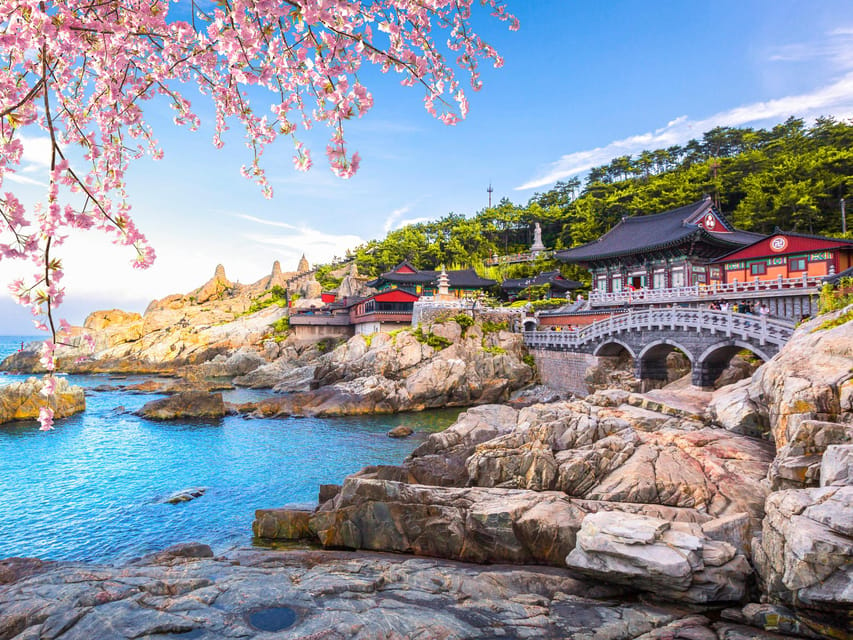
Start with the view. Two of Busan's most-photographed spots line up well for one morning. Gamcheon, the 'Santorini of Korea', packs pastel houses so tight they climb the hillside like painted bricks. Every alley carries murals, small installations, sudden color. Haedong Yonggungsa perches on coastal rocks north of the city. Waves smash its foundations while monks ring bells. Together they burn only a half day and hand you both urban texture and coastal drama, the two things that define Busan.

Duration
4-5 hours
Transport
Gamcheon: Bus 2 from Toseong-dong or Honam-dong, or just grab a taxi from Jagalchi. Haedong Yonggungsa: Bus 181 from Haeundae or ride Busan Metro Line 2 to Jangsan then switch to bus.
Gamcheon Culture Village murals and the Little Prince statue viewpoint Haedong Yonggungsa, dramatic seaside Buddhist temple with sunrise views Local cafes in Gamcheon with rooftop views over the port

Namhansanseong Fortress (from Seoul)

$5-15 USD including transport and food

Most hikers skip Namhansanseong. Big mistake. This mountain fortress sheltered the Joseon king during the 1636 Manchu invasion, UNESCO-listed, yet barely visited. The complete wall circuit stretches 9km, though you'll nail the best bits in 2-3 hours. Dense forest swallows the trail; Seoul suddenly appears through gaps in the trees. Inside the walls, a tiny village hosts makgeolli restaurants that have fueled hikers for generations.

Duration
3-4 hours
Transport
Take Subway Line 8 straight to Sanseong Station, then hop on Bus 9 and ride to the south gate. Door-to-door, you're looking at 15 minutes total from the station. Easier still: flag a taxi from Sanseong Station and go direct.
Mountain fortress walls with views over greater Seoul South Gate (Jiam) entrance and main command post Makgeolli and pajeon (spring onion pancakes) at the inner village restaurants

Everland (from Seoul)

$50-70 USD including transport and admission ($50 gate price, cheaper online)

South Korea's largest theme park sits about an hour from Seoul and runs better than you'd guess, the rides are solid, the T-Express wooden roller coaster keeps landing on Asia's best lists, and the seasonal gardens (tulip festival in spring, rose festival in May-June) deserve a stop even if roller coasters aren't your thing. Full day is better. Half-day works.

Duration
4-6 hours (flexible)
Transport
Skip the subway maze. Direct shuttle buses roll from Gangnam Station and several hotel zones, 60-80 minutes, traffic willing.
T-Express wooden roller coaster (consistently ranked top 10 in Asia) Zootopia section with giant pandas Seasonal garden festivals (spring tulips, summer roses)

Day Trip Tips

Make the most of your excursions.

  • Grab a T-money card at any convenience store, GS25, CU, 7-Eleven, at the airport or Seoul Station. It works on buses, subways, and some taxis across the entire country. Reloading is straightforward at any metro ticket machine.
  • The KTX high-speed rail is your best friend for reaching Gyeongju, Busan, Jeonju, and Daejeon. Book seats in advance on the Korail website or app (korail.com), discount advance tickets (KR Pass or early booking) can be significantly cheaper than walk-up prices.
  • For DMZ and JSA tours, book at least a week ahead, sometimes more in peak season. The JSA requires passport registration. It can be cancelled at short notice for security reasons. This is rare but worth knowing.
  • Spring and autumn win. April-May and September-October give South Korea its best weather windows for day trips, mild days, crisp air, zero drama. Summer fights back. July-August turns hot, humid, and throws the occasional typhoon just to keep things interesting. Winter doesn't apologize. It is cold, yes, but skies stay clear and some moments, Nami Island's snow-dusted trees among them, are worth every shiver.
  • Express buses and KTX trains run so often you can usually buy a ticket the same day, just walk up. Seats on the train disappear fast. Buses don't. Seoul's two express bus terminals, Gangnam and East Seoul, split the country between them. Check the signboard. Pick the wrong terminal and you'll ride in circles.
  • Naver Maps and KakaoMap beat Google Maps for local transit in South Korea, bus schedules outside Seoul. Google Maps works fine for navigation. Both local apps now have English interfaces.
  • Leave at dawn, no joke. Day trips to Gyeongju or Andong feel like a sprint if you exit Seoul after 8 a.m. Grab the first train or bus, roll in before the tour buses, and you'll own the place for a full hour.
  • You won't need much cash, cards now swipe everywhere, even at noodle stalls and night markets. Still, keep 20,000-30,000 won (roughly $15-22 USD) in your pocket. That covers taxis, market snacks, and the few old temples that still insist on paper tickets.

Book These Day Trips

Top-rated excursions you can book now.
Top Attractions Authentic One-Day Guided Tour

Top Attractions Authentic One-Day Guided Tour

4.9 1302 reviews from $42

Explore the key attractions of Busan City with a certified guide, including Gamcheon Culture Village, UN Memorial Cemetery, Haedong Yonggungsa Temple, Cheongsapo, Blue line Park, and Jagalchi Market.

[Hotel Pick-up] Gyeongju UNESCO Private Tour with Local Guide

[Hotel Pick-up] Gyeongju UNESCO Private Tour with Local Guide

5.0 305 reviews from $186

# Possible to pickup from Gyeongju & Drop at Busan # Possible to pickup from Busan & Drop at Gyeongju # Possible to pickup from Gyeongju & Drop at Gyeongju # Possible to pickup from Busan & Drop at Bu

Korean Drinking Games Night (non-drinkers are also welcome)

Korean Drinking Games Night (non-drinkers are also welcome)

5.0 148 reviews from $40

Play Korean drinking games that only locals know! Experience Korean drinking culture in the hottest nightlife area! Try Korean signature drink Somaek and Soju Bomb!

Korean Cooking Class with Grocery Shopping at Seoul Local Market

Korean Cooking Class with Grocery Shopping at Seoul Local Market

5.0 120 reviews from $90

Our class isn't just about learning how to cook, it's about experiencing authentic local life and discovering the true essence of Korea. Forget the tourist traps and what you've seen in guidebooks! J

Gyeongju UNESCO World Heritage Sites and History Full-Day Tour with Lunch

Gyeongju UNESCO World Heritage Sites and History Full-Day Tour with Lunch

4.8 105 reviews from $190

During this complete 8-hour small-group tour, your dedicated guide and driver will escort you through the historic city of Gyeongju, often referred to as "the museum without walls." The itinerary incl

Tailored Private Tour from Seoul

Tailored Private Tour from Seoul

5.0 81 reviews from $230

The unique distinction of the tours offered lies in our fully customized and private experiences. Each traveler can design a personalized journey tailored to their preferences and schedule, exploring

Explore Activities in South Korea

Didn't see anything interesting yet?

Browse Viator's full catalog of tours, day trips, food experiences, and private guides in South Korea.

See All South Korea Tours on Viator